Thursday, June 10, 2010
Got Ants!
Today I found the fire ants, or at least a bunch of them on the way to science and then spent 20 minutes after science collecting about 14 of them. They are milling about in the giant ant farm. I will post pictures once they do something.
Read More......

Wednesday, June 9, 2010
The Minds of Elementary School Teachers
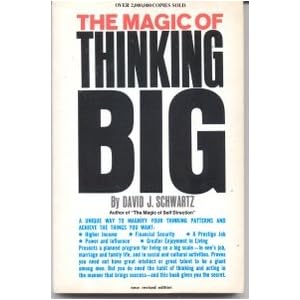
My mother and I lived with my aunt and uncle in 7th grade during the Gulf War. This is when I failed math. My uncle was way into self-help and had a number of books on hypnotism. I read one of the most important books in MY life thanks to my uncle: The Magic of Thinking BIG by David Schwarz. I reread it dozens of times. But I also started reading about hynotism myself.
In high school I got a book on hypnotism myself (my experiences hypnotizing my two victims were interesting). Besides describing many manners of inducing hypnosis, tests or routines were also discussed in the book. Things like the hypnotized person trying to lift up their feet but finding that they could not.
One thing that could be done under hypnosis is to hypnotize a person to forget a number entirely. So if it were three, they will count "One, two, four, five." When asked "What's 5 minus 2?" the person might answer 2, 4, or a made-up number. There were two groups however who had HUGE problems with this sort of test or experiment. Very young children who had no concepts of numbers entirely AND elementary school teachers. For those with moderate math knowledge the name of 3 was not very important. To those with advanced math knowledge, like physicists or mathematicians, the name of 3 is also not very important too. But elementary school teachers are so used to teaching students the numbers that in their minds there can be nothing except the numbers they have spent so much time teaching to students, so they are generally unable to do away with a number. Read More......
Monday, June 7, 2010
Class Groups, Fractions, Confusion
This is a very long rambling post. Unfortunately I talk my way around an issue or problem and seldom straight through. My wife and I spent the early part of the evening collecting the materials I'll need for tomorrow's science lesson on making predictions and density. I'll also be teaching or presenting it on June 15 to the same entire group that was present in Dr. Olsen's hijacked classroom today.
Real Life Division or Classroom Groups
The human brain loves to identify patterns. If a 5th grade classroom teacher has divided her students into Orcas, Jellyfish, Dolphins, and Sea Urchins and there are 4 Orcas, 3 Sea Urchins, and the rest of the class is split between Dolphins and Jellyfish, what does that mean? As a sub in that class, I tried to piece together this grouping, came to my own conclusions, and explicitly asked the students. The Dolphins and Jellyfish said the 4 Orcas were troublemakers, but I knew this couldn't be it, because one of the most responsible students in the class was an Orca. The names also connoted something. Were the Dolphins all helpful and the Orcas predatory in the classroom? Are the Sea Urchins prickly students? Do the Jellies just float along?
In my Practicum 2 class, the teacher hands out poker chips to divide her class up to differentiate her math lessons and work with small groups. I became overly-focused on the fact that red chips seemed to connote the bright students who "get it", while "white chips" would spend time with the teacher being retaught. Preparing for my own lesson, I tried to clarify: what would happen if I gave a red chip student a blue chip or a white chip? It seemed the white chips held a stigma (to me at least). This puzzled my teacher. None of the kids, she said, ever complained about getting a white chip. Instead they are excited; they got to spend time with the teacher and oftentimes played math games with her. She happened to bring my chip-focusedness up with our site facilitator in a meeting last week, but the site facilitator too started reading into the chip colors, just like I did. When I told my wife about it, she too started making assumptions about what the color of the chips meant.
Unequal Fractions
Now that my third graders are onto fractions - and now that I'm paying closer attention to the specific vocabulary and terms used in the classroom - I keyed into the whole idea (bad pun) of fractions being equal parts. A pizza cut into 8 slices has 8 near-identical slices. Each slice is a congruent region to every other slice.
Ok, going off on a tangent here (better math pun): how confusing is it to use congruent to describe two shapes that are the same size and shape, yet we also can talk about lines being congruent? I've just had to do a little research to make sure I'm not even making up the idea of congruent lines vs. congruent shapes. Ah, they both can be congruent because it means "coinciding exactly when superimposed"
Anyways, getting back to fractions. Fractions are a way of dividing a whole into parts. A way? A representation? Yes, this is going to get long. Unequal fractions is apparently an actual term for something. I just mean fractions with unequal parts.
For example:
Dividing a 20 person class into 4 groups, normally would have 5 people in each group, but what if:
Red Group: 7
Blue Group: 3
Yellow Group:5
Green Group: 5
So we could talk about one fourth of the groups being confused about a concept, if all of Red Group does not get the idea of what I'm writing about here, because their group is ONE QUARTER of the class. But what if 2 members of Red Group do get it! They are 2/7ths of Red Group. Essentially I'm doing division of fractions, I guess. 2 sevenths of 1 fourth. But that's really convoluted. I'm talking about 2/20 of the class. I thought I was DIVIDING the fractions, but I was just multiplying them. I picked easier numbers. I know if one student out of the 20 does something, he is 1/20th the class. And if I say 1/5 of Green Group did x, I really am saying 1/5 of 1/4, so 1/5*1/4... Hmmn.
That doesn't make much sense, but it does highlight my confusion about the nature of fractions.
In my mind at least, fractions and decimals serve the same purpose. 0.25 is 1/4. But 0.25 makes no assumptions over how the other 0.75 is divided up. But 3/4 does seem to! What's going on here??? Read More......
Real Life Division or Classroom Groups
The human brain loves to identify patterns. If a 5th grade classroom teacher has divided her students into Orcas, Jellyfish, Dolphins, and Sea Urchins and there are 4 Orcas, 3 Sea Urchins, and the rest of the class is split between Dolphins and Jellyfish, what does that mean? As a sub in that class, I tried to piece together this grouping, came to my own conclusions, and explicitly asked the students. The Dolphins and Jellyfish said the 4 Orcas were troublemakers, but I knew this couldn't be it, because one of the most responsible students in the class was an Orca. The names also connoted something. Were the Dolphins all helpful and the Orcas predatory in the classroom? Are the Sea Urchins prickly students? Do the Jellies just float along?
In my Practicum 2 class, the teacher hands out poker chips to divide her class up to differentiate her math lessons and work with small groups. I became overly-focused on the fact that red chips seemed to connote the bright students who "get it", while "white chips" would spend time with the teacher being retaught. Preparing for my own lesson, I tried to clarify: what would happen if I gave a red chip student a blue chip or a white chip? It seemed the white chips held a stigma (to me at least). This puzzled my teacher. None of the kids, she said, ever complained about getting a white chip. Instead they are excited; they got to spend time with the teacher and oftentimes played math games with her. She happened to bring my chip-focusedness up with our site facilitator in a meeting last week, but the site facilitator too started reading into the chip colors, just like I did. When I told my wife about it, she too started making assumptions about what the color of the chips meant.
Unequal Fractions
Now that my third graders are onto fractions - and now that I'm paying closer attention to the specific vocabulary and terms used in the classroom - I keyed into the whole idea (bad pun) of fractions being equal parts. A pizza cut into 8 slices has 8 near-identical slices. Each slice is a congruent region to every other slice.
Ok, going off on a tangent here (better math pun): how confusing is it to use congruent to describe two shapes that are the same size and shape, yet we also can talk about lines being congruent? I've just had to do a little research to make sure I'm not even making up the idea of congruent lines vs. congruent shapes. Ah, they both can be congruent because it means "coinciding exactly when superimposed"
Anyways, getting back to fractions. Fractions are a way of dividing a whole into parts. A way? A representation? Yes, this is going to get long. Unequal fractions is apparently an actual term for something. I just mean fractions with unequal parts.
For example:
Dividing a 20 person class into 4 groups, normally would have 5 people in each group, but what if:
Red Group: 7
Blue Group: 3
Yellow Group:5
Green Group: 5
So we could talk about one fourth of the groups being confused about a concept, if all of Red Group does not get the idea of what I'm writing about here, because their group is ONE QUARTER of the class. But what if 2 members of Red Group do get it! They are 2/7ths of Red Group. Essentially I'm doing division of fractions, I guess. 2 sevenths of 1 fourth. But that's really convoluted. I'm talking about 2/20 of the class. I thought I was DIVIDING the fractions, but I was just multiplying them. I picked easier numbers. I know if one student out of the 20 does something, he is 1/20th the class. And if I say 1/5 of Green Group did x, I really am saying 1/5 of 1/4, so 1/5*1/4... Hmmn.
That doesn't make much sense, but it does highlight my confusion about the nature of fractions.
In my mind at least, fractions and decimals serve the same purpose. 0.25 is 1/4. But 0.25 makes no assumptions over how the other 0.75 is divided up. But 3/4 does seem to! What's going on here??? Read More......
Thursday, June 3, 2010
Math Vocab II and ASW2
Talking to my teacher during her prep today, she confirmed that I should study the math vocabulary from the [Envisions] book to learn it after I confessed that I would not have known what a number fact family is. The students are on fractions now. Most of them seem to be getting what fractions are.
For my ASW2 I am focusing on these two standards: (3)1.12 model and explain multiplication and division as repeated addition or subtraction [NS/PS 1.3.4] and (3)1.14 Immediately recall multiplication facts (products to 81).
In other news, my wife is now on summer vacation with 9-month schools ending yesterday. I also brought a glass jar with a lid to campus to try to capture some fire ants I saw. In one of the greatest disappointments of my life, when I got an ant farm last year for Christmas and ordered the ants... they showed up dead. So I have been biding my time ready to pounce on an unsuspecting ant colony. I think they are in hiding today because it is so hot out. Read More......
For my ASW2 I am focusing on these two standards: (3)1.12 model and explain multiplication and division as repeated addition or subtraction [NS/PS 1.3.4] and (3)1.14 Immediately recall multiplication facts (products to 81).
In other news, my wife is now on summer vacation with 9-month schools ending yesterday. I also brought a glass jar with a lid to campus to try to capture some fire ants I saw. In one of the greatest disappointments of my life, when I got an ant farm last year for Christmas and ordered the ants... they showed up dead. So I have been biding my time ready to pounce on an unsuspecting ant colony. I think they are in hiding today because it is so hot out. Read More......
Thursday, May 27, 2010
Today
To approach my teacher, to start hearing from her, I had to lower myself. I had to put aside the notion that we are peers or colleagues. I had to view her as the teacher and me as the student. And then conversations started to come forth and actual learning. There is really a big gulf between us. I have one of the best teachers with the most to teach, but then I have so much further to climb and learn. I have a lot of brain activity right now. My mind is trying to cope with my environment and make sense of things. It's a sign of actual learning, but it's uncomfortable.
I coasted through Practicum 1 with straight 3's. I had some problems, but they were resolved by my personality and not from me learning anything. My teacher now is the REAL DEAL.
I am not someone who likes challenge, but now I do have a challenge and I stand to gain so much from her. Read More......
I coasted through Practicum 1 with straight 3's. I had some problems, but they were resolved by my personality and not from me learning anything. My teacher now is the REAL DEAL.
I am not someone who likes challenge, but now I do have a challenge and I stand to gain so much from her. Read More......
Math Language
When I taught my lesson on Introducing Area (Envisions 16.5), one of the things that my PSMT kept telling the kids as she helped them later is: You know this, it's like an array....array....array. So I probably raised my eyebrows, but brought it up yesterday and asked about it and happened to mention that it's not really a standard vocabulary word. She responded something like oh but it is! (For them). They had learned mulltiplication by studying arrays.
What is an array? When I think of "an array", I think of an array of abilities or an array of numbers or a satellite array, so things which are linked and connected. A satellite or computer array is a series of connected computers that work together. In video games your character has an array of attributes that decide how well you shoot or jump. When I asked Debbie what an array is, she couldn't tell me. I'm certain she could do the multiplication that an array suggests to my 3rd grade classroom.
On the Daily Spiral Review my students will do today for my unit on volume, there is a question about lines of symmetry, prompting me to ask my teacher if her kids would know that. She said they'd been studying it since first grade. Other questions will ask about congruence or vertices, irregular vs. regular polygons.
Two or three years ago the Review-Journal published an article about failing math scores and included some of the test questions being given to our students. They had a similar sort of vocabulary. My mother's then-boyfriend and she, both college graduates, couldn't understand what the problems were asking. His degree was in physics and he helped to design the early programming of ICBMs during the Cold War for Boeing.
So.... our kids must be learning a lot, right? I don't think so. Maybe the NCTM would be thrilled by kids learning (or not really learning) what math terms mean, but it creates a disconnect for other generations trying to help students with problems they could actually help them with. Read More......
What is an array? When I think of "an array", I think of an array of abilities or an array of numbers or a satellite array, so things which are linked and connected. A satellite or computer array is a series of connected computers that work together. In video games your character has an array of attributes that decide how well you shoot or jump. When I asked Debbie what an array is, she couldn't tell me. I'm certain she could do the multiplication that an array suggests to my 3rd grade classroom.
On the Daily Spiral Review my students will do today for my unit on volume, there is a question about lines of symmetry, prompting me to ask my teacher if her kids would know that. She said they'd been studying it since first grade. Other questions will ask about congruence or vertices, irregular vs. regular polygons.
Two or three years ago the Review-Journal published an article about failing math scores and included some of the test questions being given to our students. They had a similar sort of vocabulary. My mother's then-boyfriend and she, both college graduates, couldn't understand what the problems were asking. His degree was in physics and he helped to design the early programming of ICBMs during the Cold War for Boeing.
So.... our kids must be learning a lot, right? I don't think so. Maybe the NCTM would be thrilled by kids learning (or not really learning) what math terms mean, but it creates a disconnect for other generations trying to help students with problems they could actually help them with. Read More......
Monday, May 24, 2010
Teaching Area tomorrow
So I resisted talking about the disappointing LOST finale last night in class, but a Math blog is the perfect place to mention the absence of the "numbers". Quite a let down.
Ok, here is something I'm working on for teaching area to the third graders tomorrow in my practicum. I am using the Legos to brace and keep the plaster squares at right angles with one another as I glue them down. I'm going to ask the class how many squares I'll need to fill in the inside of the rectangle I'm creating.
I enjoyed class today. It was fun figuring out how to arrange the layout. When I first saw the grid, I thought of comic book panels.

Type your summary here Read More......
Ok, here is something I'm working on for teaching area to the third graders tomorrow in my practicum. I am using the Legos to brace and keep the plaster squares at right angles with one another as I glue them down. I'm going to ask the class how many squares I'll need to fill in the inside of the rectangle I'm creating.
I enjoyed class today. It was fun figuring out how to arrange the layout. When I first saw the grid, I thought of comic book panels.

Type your summary here Read More......
Subscribe to:
Posts (Atom)
